Saturday, February 15, 2025

Story Time

 In this blog, I will explain the basic story of my film opening. 

At the beginning of my film, I would like to start off with titles of production companies that will last for only a few seconds. Then I want a black screen to slowly fade into the scene that is occurring. But while the black screen is shown I want there to be audio of people arguing, but it to be Not heard well and then it slowly sounds clear.

The audience will see a couple fighting and either I have not decided yet on the bathroom or in the living room. They will be arguing about something petty, which will then turn into something bigger. They will start arguing about the thing that happened and then start to bring up personal stuff. I want to fight to be intense. I want to try to make it as intense as the car scene in the movie ‘Stronger’ (2017). but obviously not as intense because that scene in that movie was about more personal and relationship stuff that is way more serious than my characters are supposed to be feeling.

After the argument, I want to show the emotions and feelings that each one of them is feeling after what just happened. I want to show them separating and then highlight how the girl in the relationship is very saddened but also upset about what is happening. The girl will be in her own area like a room or the living room. The guy will go wherever else the girl is not, and he will be feeling sad as well, but he seems worried for the girl and I might want to put a scene where he is looking at her while she is in her own area.

At this point, the film opening would be around a minute or a minute 30 in so since I have a bit more time to put in till it hits the maximum I want to develop one of the characters. I am going to develop the character of the girl so the next scene would be the next morning, and the girl will be going on a run. While she’s running, she will seem a bit upset but also look like she is tired due to the exercise. I will have music playing while she’s running like if she has her AirPods in. And then she will bump into somebody. She will stop and then look at the person and then the person look back. When she sees the person, she recognizes the person. Then when she takes off her AirPods the music stops. She will look at the person as if she’s trying to recognize who it is, but the person recognizes her first and says hello. The person who bumped into her is her ex-boyfriend. I will have them have a little talk. At this time the limit for the film opening will be at its max so I will probably be able to show the conversation and that’s it or possibly show the conversation and then the girl walk off. The point of the scene where she runs into her ex is to bring back memories or to reflect on what just happened since she is currently with somebody. This is the film would make a reflection later of how her last relationship was like compared to the one now.

I have not come up with anything else for the story especially because I don’t need to because I won’t be able to show it, but I will be coming up with a story more because I am interested in completing the story. If anything throughout these posts I will keep you updated, or I will make a separate blog containing the rest of the story.

Now it is time for me to make the storyboard and of course, make the script. The script will be very long and will take a long time so I will probably have to develop the storyboard first while I’m developing a script. In my next blog post, you will see my storyboard and in the next, you will see the script hopefully.


Wednesday, February 12, 2025

Media Theory within the Film Opening

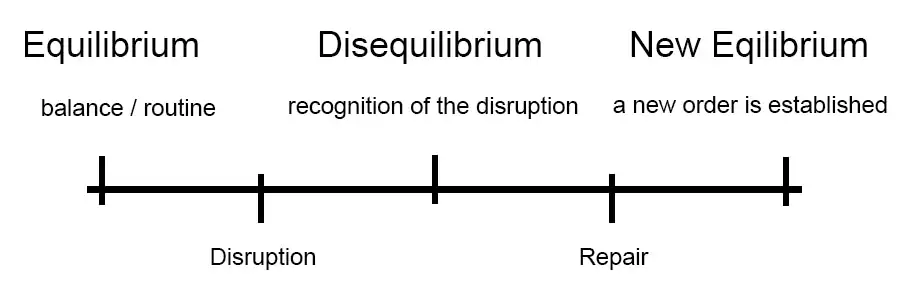
 Many media theories can be implemented in films. Lots of those theories would be very useful within a film, but one that I would like to implement into my film is 'Todorov's Narrative Theory of Equilibrium'. To give some context, this theory states that every narrative has distinctive parts. His theory explains it in multiple parts, but to ease it out I will split it into three parts. Equilibrium, "the audience is introduced to characters and beginning of the story." Disequilibrium, "includes the initial disruption, something that disrupts the protagonist's life, as well as other actions before the climax. When the protagonist recognizes their life has been disrupted, they will work to repair the situation. In" New Equilibrium, "protagonist has resolved the disruption, or not (usually due to a good reason)." This theory though is really broken down as equilibrium, disruption, recognition, resolution, then new equilibrium. Now that you know the basic definition, this is how it could be implemented in a film. 


Disruption

You may be wondering why I am starting with disruption rather than equilibrium. This theory starts with equilibrium so that throughout the story a conflict is made and then later repaired. Well for my film opening it would start out with an understood conflict. My characters would be in an argument at the beginning of the film. The story of the film is about a couple who is going through a rough patch in their relationship. In this context, the equilibrium would have already passed but the equilibrium will be shown during the recognition while the characters are reflecting on their past and the imperfections within their relationship. A new equilibrium will be established at the end. For my film, I will use inspirations from disruptions from the films Waves and Stronger. I want the conflict to be intense and to be able to show the obvious problems within their relationship even though we don't know anything about them so far. After the main conflict, I want to show the emotions of the characters after the argument, to demonstrate how it is affecting them.


Recognition 

This is a step I did not talk about. Recognition is after the disruption has occurred. It is when characters are affected by the disruption and start to become aware of the problem that is occurring. For my film, this would start after the argument ended and the characters separated from each other within the house. During this scene we would see how the disruption affected them both, highlighting their emotions and recognizing that this is affecting them. This scene would have to show a strong sense of emotions that the characters are feeling from the argument that has occurred. Capturing these emotions will be hard but necessary for the film. This will then start the long process where both people in the relationship will have to deal with their emotions and possible past conflicts to get to a resolution. 

Resolution

The resolution in my film opening will not be able to be shown due to the length, but if it were longer this is how it would be shown. After the characters go through the recognition phase, they will have already dealt with their emotions and reflected on the situation or the start of how the disruption started. The character will now be in a state of understanding, where the character will be trying to fix what is happening. I would have the character probably have a deep talk, where they reminisce on the past, but of course, highlight that they need to move on to the future. They need to forget the past and start a new one. The past is the past and they cannot use that love to repair what has been damaged. They must create new memories, and a newfound love for each other to repair what has been broken. This will set up what will become the new equilibrium. 

New Equilibrium

For the audience, this would technically be the equilibrium because they were not shown the equilibrium at the start, but for the purpose of the theories and technicality, it would be considered the new equilibrium. At this part in the film either the couple would have broken up and possibly stayed as friends or they possibly repaired their relationship and it is as strong as ever. I would like to go the route where they stay together. So at his point of the film, the character would still show signs that something occurred but that it helped get the couple to the strong point that they are in now. This couple would be at an obviously better point than at the beginning of the story and most likely even stronger than it was during the equilibrium that was not shown. I would demonstrate this by showing the deep connection between the characters. There would be scenes showing things like intimacy, compassion, lust, love, and much more. The characters would also probably be at a point where they can use each other as comfort in certain situations. The couple would also be able to speak freely on things that the other person may be doing that is affecting the other, and would be able to say this without causing an argument like it did at the beginning of the film. 


Monday, February 10, 2025

Group Meeting #1 Reflection

 I know what the hell to do now!

This group meeting helped me out a lot. My group members gave me a lot of insightful ideas and contributed to my decision on which genre to do. In my blog post before I did not know what to do. But now I do.

At the beginning of our talking, we all discussed each of our ideas for our film openings. Everyone shared their ideas and we gave feedback so that they could improve or expand on their idea. When it came to speaking, it was different than the rest because I was not sure which genre to choose, but I didn’t know the story that I wanted to convey for both genres. I explained to my group members what I wanted to do first for my gangster film. I said I wanted to do an Italian mafia type of film focused on a character who would do anything for his family. They told me that it would be a good story and it would be cool to see a gangster film, especially because nobody in the class is doing one. But they said that doing a film like that would be hard due to the conditions that we have as high schoolers. Usually, gangster-type movies are shot more professionally, and even though I have a professional camera, it still will be hard to pull off. Then I realized another thing which was that gangster films use a lot of special effects like when it comes to gunshot wounds and other violence, and those types of effects are very hard to copy. They still, of course, supported my decision if I decided to do gangster films, but they felt that it would be much harder to do compared to my other genre.

For the film Romance Drama genre, I told them my idea of having a couple that is going through a rough patch and wanting to show the struggles of each person in a relationship to demonstrate why they are going through that rough patch. My group members instantly said that this genre would be better and that this story would be more practical to pull off. They liked the story especially when I compared it to the movie Waves which focuses on an African boy in a relationship who struggles through many things. I compared both movies saying that I wanted to do something similar to mine, but instead of focusing on one character, I wanted to focus on both. I said I would like to make the film start with them arguing. My group members told me that there are many things I can do with that type of film. One of the suggestions they made was to start off with a black screen and mumbles of voices. Which I thought was a good idea. Then I said that I would like to show the emotions of each of the character characters after the argument. They said at first that I could show the characters reminiscing, but also being mad at the others after a breakup, but I did not want the relationship to end in the story I just wanted them to have a rough patch. So I expanded on their idea and instead of showing a breakup I would show the emotions of the characters after the fight so that I can show how each person in a relationship feels after this type of conflict. They said that that was a good idea and I should implement that.

Thanks to this group meeting. I was able to decide what genre I would be doing. As much as I wanted to do a gangster film about an Italian mafia because those types of movies are my favorites and I feel that making one of those films would be amazing. On the other hand, I do love Romance Drama films and I would love to make a film about one as well. However, my group members helped me realize what is practical and what is not. A gangster film would be hard to make compared to a romance drama. This doesn’t mean that I am giving up on that, but I feel that I can be more successful and not run into as many problems if I were to do a romance drama. And now that my group members are expecting me to make a romance drama I, of course, cannot let them down. My blog post before said that I did not know what to do but now I do and I found it in a way that I feel is better than coming to the conclusion myself. Thank you to all my group members who gave me insight into my decision and gave me great idea ideas that I can implement into my film opening.


Sunday, February 9, 2025

Film Opening Decision/Representation

 What the hell do I do?

I don't know which genre to do yet but I have to decide soon. I must decide by tomorrow because I need to start making a storyboard and script. My decisions right now are gangster or romance. I know what my stories will be about but I have to choose one. For my gangster film, I would do an Italian mafia film focused on a character who will do anything for his family, his family is everything to him. For my romance film, I would do a romance drama film that focuses on a couple who are going through a rough patch in their relationship. 

Italian Mafia

For the gangster film, I would make it like a mix of the Godfather and Scarface. The Godfather focuses on the family of the Corleone and on the trust within the family. In the movie, it is also shown that family is what is most important. Scarface focuses on a man who will do anything for his family and will do anything to be on top. For my film opening, I feel I would want to make it show the importance of family like it does in The Godfather, but at the same time show the power and the man who will do anything for that family like in Scarface. 
I know that for my film I would like to use lots of mid-shots and close-ups to show my character. I want to try to also implement some action shots as well that will catch people's attention right away. I want my character to be prominent, and have a look that people will remember. The look will be one thing that I will have to work on because it has to be memorable but cannot be too extravagant, it still also has to match the film.


Romance Drama

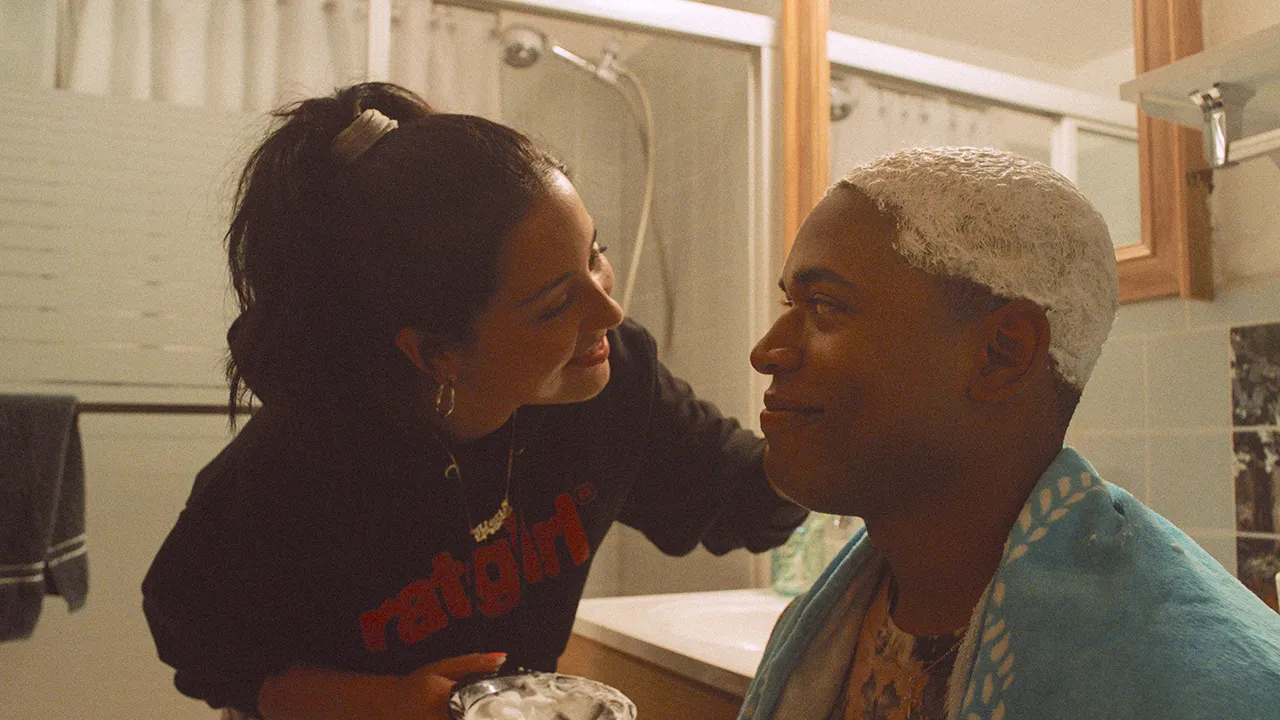
For the romance drama film, I would like to make it similar to the movie Waves but instead of focusing on one character but also demonstrating the relationship, I would like to make it about the relationship while also focusing on the life of both characters. Waves is a movie about an African-American kid who struggles with his family, the loss of a loved one's life, and his relationship. I would want my film to be more focused on the rough edges of relationships, and then splitting the lives of both people in the relationship to show why the relationship is going through problems. 


I know for my film I would like to try to use rack focuses so that I can show a person's emotion and then focus on the person's emotion next to them. I want to use this technique so that I can shift focus between characters. I also want to use lots of mid and close-ups to focus on the character's emotions and feelings. I will try to blur the background to have the focus secure. I want to show the struggles of being in a relationship, while also demonstrating the reasons from each person in the relationship why those struggles are happening. 

I'll figure it out

By tomorrow I feel I know what genre I will do. It's hard to decide because I want to do both and I have 2 great ideas for both. Either film would be great to display in a film opening. Both films would be great to do but there are some advantages and disadvantages for each. The advantage of the Italian Mafia film is the ability to make it authentic by using things from my culture and being able to recreate a family/character from movies I love. The disadvantages though are costumes which are usually formal clothes which is hard to move around in and not everyone owns formal clothing. For the Romance Drama, the advantages are that I can find people to act that are already a couple which can make it more real, and I can show the emotions of the character which can make a big impact on the people watching the film. The disadvantages though are that if I can't find a couple I have to find people comfortable with acting like a couple and I have to probably find adults who can be in the film to act as parents. With these advantages and disadvantages in mind, this will help me decide what to do. In my next blog, you guys will see what I have chosen but till now you know what to expect in either outcome. 


Thursday, February 6, 2025

Portfolio Timeline

 One of the most important things when creating a film like this is to schedule your approach to the film. Planning is very important, to be able to make this project the best that it can be I must create a structure of how things will be done. 

Schedule

1. Research

  • Research common film techniques used in a certain genre
  • Research the genre background to understand the ins and outs
2. Pre-Production
  • Come up with a central idea of the film
  • Make a storyboard
  • Write a script
  • Find music that can match certain scenes
  • Find actors and locations
  • Look for equipment that I will use to film
  • Find out the date/dates for filming
  • Creating a title card
3. Production
  • Filming scenes 
  • Recording Foley, and voiceovers if needed
  • Directing actors
4. Post-Production
  • Editing the footage
  • Adding music and voiceovers
  • Adding effects 
  • Implementing the title card
5. Finalizing
  • Watch the edit a few times to make sure everything is good
  • Have others watch to make sure all is good
  • Fix possible mistakes or make adjustments 
6. CCR
  • Review how to do the CCR, for example, look at past blogs
  • Write the reflection
  • Proofread and review the CCR
I have until 3/25 and it is currently 2/6. That is a pretty good amount of time but I cannot take the time for granted. I must follow my schedule and plan with others in my films accordingly. 

Timeline

This is a more detailed schedule than the one above.

(2/6-2/11)
  • Decide the genre I will be doing
  • Research more about the genre
  • Possibly start storyboard or basic idea of the story
(2/12-2/22)

Pre-Production
  • Storyboard
  • Script
  • Find locations and actors
  • Set dates and times for filming
(2/23-3/3)

Production
  • Film scenes
  • Make foley noises
  • Do voice-overs
(3/4-3/10)

Editing
  • Put scenes together
  • Add effects
  • Enter in voice overs and Foley
  • Review edit and finalize
Start to work on CCR
  • Research and start the first parts of CCR
(3/11-3/21)

CCR
  • Continue writing CCR
  • Proofread and finalize CCR
(3/22-3/25)

Extra time
  • Use this time to review everything to make sure that all is good
  • Review the CCR
  • Review my film opening

My commitment to the schedule

I will try my best to stay committed to the schedule but obviously, there will be some complications, but I will try my best to get through them. Sticking to this schedule will help me out a lot. I know some complications will be unavoidable but I can try my best to make up the time lost. 

Wednesday, February 5, 2025

Credit Sequences

Romancing the Credits

For the credit sequences, I decided to take another route. Instead of talking about Gangster films again and analyzing the credit sequences for those movies, I will talk about Romance films. Gangster film credit sequences are amazing, but Romance films are different and always leave us with so many emotions whether the sequence is at the beginning or the end. 

La La Land

When think of Romance films the first thing that I thought of was La La Land, which of course is one of the most popular and most loved Romance films. La La Land (2016 dir. by Damien Chazelle) is known for its big musical numbers, the "Another Day of Sun" opening also serves double duty as an energized credit sequence. The fact that this is a high-energy ensemble piece means that credits are baked into the very fabric of the film. Smooth camera, rhythmic editing, bold modern typography-the Los Angeles spirit flows as in a musical homage. The line is utterly blurred between narrative and credits: the setting and the aspirations and artistic passions that drive this film are both conveyed through movement and song. Its colorfully bright visuals and peppy score immediately drop the viewer into a world of dreams and romance merged with the pulse of the city, setting the stage for the emotionally packed journey of this film.


It's not a credit list; it's part of the storytelling sequence. Marrying these opening credits into the kinetic "Another Day of Sun" instantly throws the viewer into the bright, almost dreamlike world of this film. That line is erased between exposition and narrative as does this, encouraging the audience from the first glimpse of the movie. This immediately sets a tone that is optimistic, creative, and oozing with youthful ambitions using dynamic choreography, sweeping motion of cameras, and fast music. There is something magical to it all-capturing both the melancholy of dream chases in Los Angeles, where it seems simultaneously an El Dorado of chances and as ruthless brutality of truth. And, so duality became one big theme across everything. The credits are an intelligent allusion to the ambition, love, and passion of art that will be reflected in the movie. The busy, energetic scene shows life and the chase for dreams at an unbeatable pace, including personal sacrifices and bittersweet moments that lie ahead. Such instant immersion into the core of the film's thematic core gets the audience prepared for the emotional journey that will ensue. La La Land reinvents the opening credits as a narrative device through the credit sequence. The credits are not separate, static parts but part of the performance. This creative way does more than catch the attention; it has set a precedent for traditional elements of filmmaking to be reinvented as tools for telling a story artistically.

The Notebook

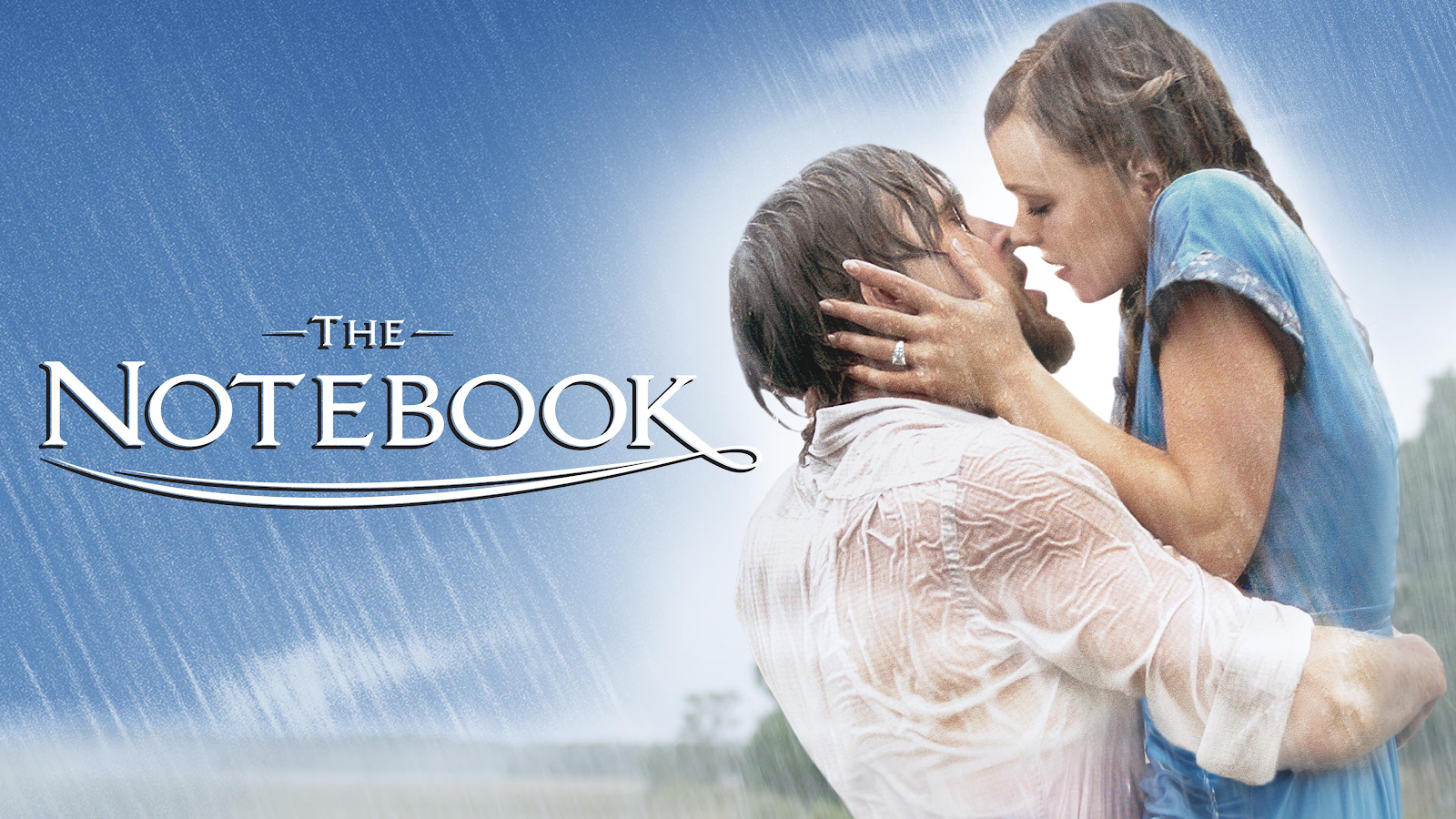
The Notebook is one of the most famous and most notable movies ever not even just for the romance. Unlike La La Land it has a credit sequence that is impactful in both the opening and ending. 

Opening credits:
Opening credits against the film's period background of the 1940s, with stylized classic typography over soft and sepia-toned imagery, immediately situates the viewer in times past, pulling threads of nostalgia and timeless romance. The credits are underlined with soft piano scores. This raises a soft reflective mood in which the audience will be ready for the love story to be forged with memory and time. This subtle elegance of credits pays its respects to traditional romance imagery while it subtly foreshadows the film's dual narrative-one of youthful passion and its enduring afterlife in memory.


Closing Credits:
As the film closes-the narrative of love, loss, and enduring memory-the closing credits provide a reflective moment. Soft imagery, at times drawn from key scenes, reminds the viewer of what they have just gone through. The score for these credits is more melancholic, inviting audiences to tarry awhile on the bittersweet nature of the story. On their part, the music and visuals combine to iterate once more themes of memory and passing time. The design elements are very true to the period detail in terms of font, and color palette-continuing even into the credits, to keep the viewer within the story until the very end.

Waves

The Waves is an amazing Romance film that falls more into Romance Drama due to its intensity and drama that unfolds throughout the film. The credit sequence for the ending of the film is different from all the other ones I have talked about. 

Where The Notebook ushered in subtlety within its intro, Waves launches out into an intensively dynamic, slightly avant-garde title sequence. Its typography has a striking impact; its cuts are rhythmic, running congruently to the shifts this film embarks on throughout these modern whirlwinds of emotional turmoil and revitalization. This contains fast cuts, image layering, and smooth transitions reflecting the internal turmoil within characters and within much of the movie's generally kinetic energy. This is an approach that informs a visceral tone that vibrates with the modern audience. A modern, pulsating soundtrack combined with credit visuals is immersive in their combination. The credits are not an information dump but a continuation of the narrative, echoing themes of change, intensity, and the uncontrollable nature of love and life.


It diffuses any dividing line between storytelling and credits, for the design and pace, in fact, function with the themes of transformation and emotional turbulence of the film itself, rather than being a mere finale. Large-type typography, rapid editing, and fluid transitions set up a kinetic visual rhythm for the inner conflict within the characters. Such dynamism drags viewers deep into the modern energetic aesthetic of this film. The pulsating soundtrack, along with the evolving images, provokes a sense of immediacy and intensity. By timing the credits to Waves' mood, this movie leaves an indelible mark that lingers as part of the overall cinematic experience.

La Waves Notebook

La La Land and Waves work to extend the regular notion of credit sequences into more integrated storytelling, while La La Land does it through musical performance and visual exuberance, Waves' does so through an explosion of dynamic, kinetic visuals to echo its modern emotional landscape. The Notebook is a little more traditional: credit usage smooths viewers in and out of its rather carefully constructed period romance. La La Land is bright and colorful, choreographed, and swooping with its camerawork to set an energetic, hopeful tone. Waves utilize bold, rapid editing and layered visuals to mirror the emotional turbulence of today. The Notebook displays elegance in restraint with soft visuals and a reflective score, perfect for its nostalgic narrative. La La Land opens its credits to excitement, allowing its audience into the world of artistic passion and bittersweet dreams. Waves leave viewers with an immersive, intensely emotional experience that lingers as part of its narrative. The Notebook offers a serene, reflective closure that reinforces its themes of enduring love and the gentle passage of time.


Tuesday, February 4, 2025

The Gangsters

 All about family, all about the trust, all about the money


The Godfather

While researching gangster film openings I of course went back to watch one of my all-time favorites The Godfather. One of my favorite films of all time. The Godfather (1972 dir. by Francis Ford Coppola) opens on a black screen; the eerie strains of Nino Rota's score dissolve into a close-up of Amerigo Bonasera. Instantly, the now-famous opening line, "I believe in America," gives way to those power, justice, and betrayal themes. He is an undertaker, begging Don Vito Corleone for justice; this sets at once the Mafia as another, parallel power structure to the American legal system. This slow zoom-out shot reveals the commanding, yet silent, dark-lit room in which Don Corleone sits; opposite the desperate Bonasera, this scene is ripe with loyalty, family, and the Godfather's moral code in preparation for a film demonstrating the circle of power and legacy. 

It sets up the overall grim, operatic tone of the film's silent, brooding atmosphere in which the audience is situated with the repressed power. Immediately, it sets several big themes within the film: loyalty, justice, and those grey areas between honor and criminality. By the desperate plea of Amerigo Bonasera, the audience is brought to the Corleone family as another system of justice founded upon personal loyalty and allegiance rather than legality. Vito Corleone sits in the dark, quiet-voiced man of the greatest influence. He is quiet at the core, his strength measured speech, and that power of complete control. This effect is elaborated in the cinematography by low-key light with deep shadows, mysterious and fateful. Up until this point, he maintains Don Corleone is more of a mythical character. Further accompanied by slow, considered camera movement and uninflamed performances to give the movie its sense of glory and theatre. All these, taken together, underline the fact that this is not, per se, a mafia movie, but rather about something deeper: namely, power, legacies, and the weight of tradition in the world of the mafia.

Goodfellas

Another amazing and all-time favorite is Goodfellas. Both movies are ones I watched in my film classes at school so they bring back memories. Goodfellas (1990 dir. by Martin Scorsese) opens with a violent moment: Henry Hill, Jimmy Conway, and Tommy DeVito driving a car when they hear noises from the trunk. They stop and pry it open, revealing a bloody but still-breathing man whom Tommy brutally stabs before Jimmy shoots him. This shockingly brutal act of violence immediately plunges the audience into the violence-ridden world of the mafia. The scene then dissolves into Henry Hill's famous voiceover: "As far back as I can remember, I always wanted to be a gangster. The quick cut to Henry's childhood introduces the film's non-linear structure, emphasizing how Henry idolized gangsters and was drawn into the lifestyle.

This is a quick, energetic opening, just plopping the viewer right into the world of organized crime. The sudden violence of the scene in which Henry Hill, Jimmy Conway, and Tommy DeVito kill a man in the trunk introduces the brutal realism of their world. Scorsese makes 'Goodfellas' immersive and personal with freeze-frames, voiceover narration, and classic rock music. Henry's voiceover, "As far back as I can remember, I always wanted to be a gangster," introduces his fascination with crime very fast. The moment gives full force to the thrill of being a gangster but also points out the dangers that will lead to Henry's eventual downfall.

Scarface

A classic film that is of course also one of my favorites. It was also one of the main films I watched with my dad, which we both loved and shared a strong interest in. Scarface (1983 dir. by Brian De Palma) starts out with grainy, pseudo-documentary footage of Fidel Castro's infamous 1980 Mariel Boatlift, whereby thousands of Cuban refugees - with many criminals - poured onto American shores. A real political context such as this places the movie in history and makes Tony Montana's story at least a bit more plausible. This is an important introduction to Tony, which happens in the detention center, in Miami, during his immigration interview. His arrogant attitude, refusal to show fear, and aversion to weakness reveal his ambitious, ruthless nature from the very beginning. Unlike The Godfather and Goodfellas, Scarface depicts the rise of an immigrant from the very bottom, showing more of the American Dream and corruption themes.

This introduction shows the thirst of Tony Montana for power and his refusal to be led, alluding that whatever it will take, he will do regarding his success. At Immigration, Tony revealed a hubris attitude during his interview that vividly contrasted with other refugees who emitted the smell of toughness. This is real footage of the 1980 Mariel Boatlift, used in a documentary-style opening for the film, grounding Tony's story in a sense of realism. The darker and more grounded this beginning is, the further it will be from the eventual wealth and chaos that will define his life, and the more drama there will be in Tony's rise and fall. The movie 'Scarface' itself introduces Tony's struggles and character, an immigrant interrelating his trek for the American Dream and as a caution against greed and ambition. 

The Greats Together

Indeed, all three films introduce their central characters and themes in specific ways in their opening scenes: setting the tone for crime, power, and ambition. 'The Godfather' opens with a slow, dialogically heavy scene in which a man begs Don Vito Corleone for justice, setting at once the mafia as an alternative power structure and touching on themes of loyalty, respect, and control. The dark lighting and deliberate pacing make for a sense of authority and tradition, placing crime as a structured, almost noble institution. By contrast, 'Goodfellas' opens with a shockingly violent moment Henry Hill, Jimmy Conway, and Tommy DeVito killing a man in the trunk of a car then moves into Henry's energetic voiceover narration. This sudden rush of violence combined with the freeze-frames and rock music, courtesy of Scorsese indeed gives the movie a frenetic, immersive texture that captures gangster life with its dangerous brilliance.

 'Scarface', though is less fantastical because it opens on a documentary opening of the Mariel Boatlift in 1980, presenting Tony Montana while he was awaiting an immigration hearing. The opening provides a political and historical context for Tony's rise to power, framing the story both as an immigrant's pursuit of the American Dream and as a ruthlessly aggressive rise to power. Unlike the quiet authority of  'The Godfather' or the kinetic energy of  'Goodfellas', crime in 'Scarface' is portrayed rather as a form of survival and social mobility. It is based on raw ambition and defiance that emanates from Tony. While all three films concern themselves with power and the cost of crime, their openings reflect their unique tones: The Godfather is grand and operatic, Goodfellas is chaotic and immersive, and Scarface is grimy and driven by personal ambition. 

Film Opening and CCR Links

Here are the link to my film opening and CCRs. Hope you guys enjoy them! Film Opening and CCRs